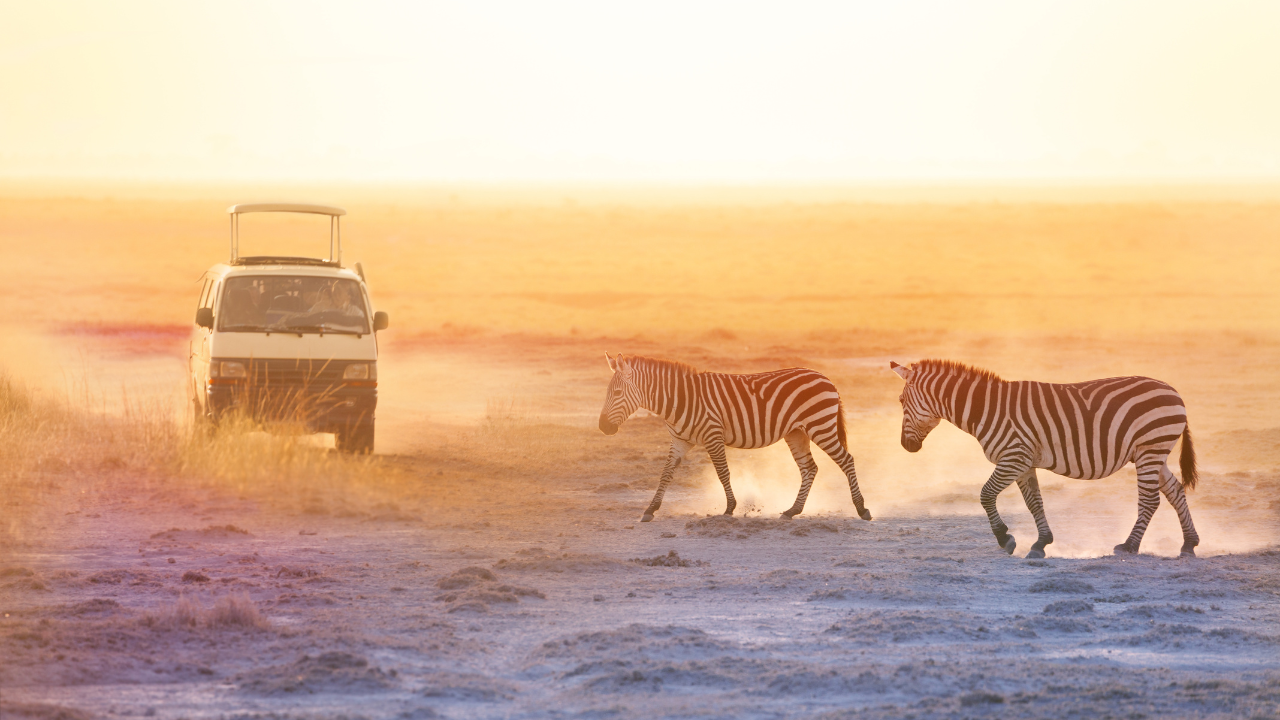
Every safari has a destination.
The best ones have a sense of place.
Northern KwaZulu-Natal is one of those rare corners of Africa where the journey feels just as memorable as the wildlife. One day, you're watching a herd of elephants disappear into an ancient sand forest. The next, you're cruising past hippos on a vast estuary or standing on a beach where sea turtles have nested for generations. By the end of the trip, it's difficult to believe all of those experiences happened within the same region.
That's what makes Northern KwaZulu-Natal so special.
While many visitors know it for its Big Five safaris, the region offers far more than traditional game drives. Here, safari blends with wetlands, coastal forests, mountain views, marine life, rich Zulu heritage, and some of South Africa's most important conservation areas.
If you're planning a trip to Northern KwaZulu-Natal, this guide will help you understand what makes the region unique, where to go, and how to build a safari itinerary you'll never forget.
Where Is Northern KwaZulu-Natal?
Northern KwaZulu-Natal stretches from the rolling bushveld of Zululand to the Mozambique border and the warm Indian Ocean coastline.
This region is home to several of South Africa's best-known protected areas, including Hluhluwe-iMfolozi Park, Tembe Elephant Park, iSimangaliso Wetland Park, and Zululand Rhino Reserve. Together, they create one of the country's richest wildlife destinations.
One of the biggest advantages of travelling here is variety. Instead of spending your entire holiday in one reserve, you can combine several completely different ecosystems within a relatively short drive.
It isn't unusual for travellers to see rhinos in the morning, snorkel over coral reefs the following afternoon, and finish the trip watching giant elephants beneath towering fever trees.
Very few safari destinations offer that kind of diversity.
Hluhluwe-iMfolozi: The Heart of Zululand
If Northern KwaZulu-Natal has a heartbeat, it's Hluhluwe-iMfolozi Park.
As Africa's oldest proclaimed game reserve, it holds an extraordinary place in conservation history. The park became internationally famous for helping save the southern white rhino through the groundbreaking Operation Rhino programme, turning one of conservation's greatest success stories into reality.
Today, it's one of South Africa's premier Big Five destinations.
Rolling green hills, winding valleys, rivers, and open grasslands provide habitat for lions, elephants, buffalo, leopards, rhinos, giraffes, zebras, wildebeest, and countless other species.
The beauty of Hluhluwe-iMfolozi lies in its accessibility.
Visitors can enjoy self-drive safaris, guided game drives, affordable rest camps, luxury lodges, scenic picnic sites, and breathtaking viewpoints—all within a reserve that's remarkably easy to explore.
For many first-time safari travellers, it's the perfect introduction to Africa.
Tembe Elephant Park: Home of the Giant Tuskers
If elephants sit at the top of your wildlife wish list, few places compare to Tembe Elephant Park.
Located close to the Mozambique border, Tembe protects some of Africa's largest naturally occurring elephants, many carrying magnificent ivory tusks that have become legendary among wildlife enthusiasts.
Yet Tembe's appeal extends far beyond its elephants.
The reserve's ancient sand forests create an atmosphere unlike almost anywhere else in South Africa. Instead of wide-open plains, game drives weave through dense woodland where every turn brings a sense of anticipation.
Animals seem to emerge quietly from the trees rather than appearing in the distance, making encounters feel deeply personal.
Tembe also tends to attract travellers looking for a slower, more immersive safari. With fewer vehicles and a wonderfully peaceful atmosphere, it's a destination where silence becomes part of the experience.
iSimangaliso Wetland Park: Where Safari Meets the Sea
Imagine starting your morning searching for rhinos before spending the afternoon swimming in the Indian Ocean.
That's everyday life in iSimangaliso Wetland Park.
As South Africa's first UNESCO World Heritage Site, iSimangaliso protects an astonishing collection of ecosystems that includes wetlands, lakes, beaches, forests, coral reefs, and coastal dunes.
The wildlife reflects that diversity.
Boat cruises on the St Lucia Estuary regularly encounter hippos and crocodiles, while nearby game reserves support elephants, rhinos, buffalo, and countless antelope species.
Offshore, humpback whales migrate along the coastline between winter and spring, while loggerhead and leatherback turtles return to protected beaches each summer to nest.
Birdwatchers are equally spoiled, with more than 500 recorded species making the region one of Africa's finest birding destinations.
Few places allow you to experience so many completely different environments without travelling long distances.
Zululand Rhino Reserve: Conservation in Action
Some safari destinations impress because of their wildlife.
Others leave a lasting impression because of what they're protecting.
Zululand Rhino Reserve manages to do both.
Created through an ambitious conservation partnership, the reserve plays an important role in protecting both black and white rhinos while supporting a healthy population of the Big Five and many other species.
Visitors often describe the atmosphere here as intimate.
Because the reserve is smaller than some national parks, guided game drives feel personal and relaxed, with experienced rangers sharing fascinating insights into wildlife behaviour and ongoing conservation efforts.
For travellers who enjoy understanding the bigger story behind the animals they're seeing, Zululand Rhino Reserve offers a rewarding perspective on modern African conservation.
More Than Just the Big Five
It's easy to become focused on checking five famous animals off a list.
Northern KwaZulu-Natal gently reminds visitors that safari is much bigger than that.
The call of a fish eagle echoing across a lake.
A troop of playful vervet monkeys racing through the trees.
The remarkable engineering of a tiny dung beetle rolling a ball several times its size.
The flash of a lilac-breasted roller crossing the road.
Or simply sitting quietly while the bush wakes with the sunrise.
Many experienced safari travellers eventually discover that these smaller moments become every bit as memorable as spotting a lion.
The wildlife here rewards curiosity as much as patience.
Building the Perfect Northern KZN Safari Itinerary
One of the greatest advantages of Northern KwaZulu-Natal is how easily different experiences fit together.
A four or five-day trip might focus entirely on Hluhluwe-iMfolozi, allowing plenty of time for relaxed game drives and wildlife photography.
With a little more time, many travellers combine two or three destinations.
A few nights in Hluhluwe-iMfolozi followed by the beaches and wetlands of iSimangaliso creates a wonderful balance between classic safari and coastal adventure.
Others pair Tembe's peaceful wilderness with Zululand Rhino Reserve's intimate guided safaris for a deeper exploration of the region's conservation efforts.
If you're fortunate enough to have a week or more, Northern KwaZulu-Natal rewards slow travel. Each reserve has its own personality, and experiencing several of them reveals just how diverse this part of South Africa truly is.
When Is the Best Time to Visit?
Northern KwaZulu-Natal offers rewarding safaris throughout the year, but each season brings something different.
During the cooler, drier winter months, vegetation becomes thinner and animals often gather around permanent water sources, making wildlife easier to spot.
Summer transforms the landscape into lush green bushveld. Young animals begin appearing across the reserves, migratory birds return, and dramatic afternoon thunderstorms create spectacular photographic opportunities.
There's no wrong season.
Instead, it's worth deciding whether your priority is easier wildlife viewing, greener landscapes, birdwatching, or fewer visitors.
A Few Simple Tips Before You Go
Pack clothing in neutral colours, comfortable walking shoes, a hat, sunscreen, binoculars, and a camera with extra memory cards—you'll almost certainly take more photographs than you expect.
Early morning game drives can be chilly, even after warm afternoons, so a light jacket is always worth bringing.
Most importantly, leave room in your schedule.
Northern KwaZulu-Natal isn't a destination to rush through.
Some of the region's greatest moments arrive unexpectedly, and they can't be planned.
Why Northern KwaZulu-Natal Leaves Such a Lasting Impression
Ask someone about their favourite memory from Northern KwaZulu-Natal, and they'll rarely begin with a checklist of animals.
Instead, they'll tell a story.
Maybe it was the elephant that quietly emerged from Tembe's sand forest.
Perhaps it was watching hippos surface beside a boat on the St Lucia Estuary.
Or maybe it was standing beneath a sky overflowing with stars, realising how wonderfully quiet the African bush can be.
That's the magic of Northern KwaZulu-Natal.
It isn't defined by one famous reserve or one unforgettable wildlife sighting.
It's defined by the way every landscape seems to tell a different story, and how, together, they create a safari experience that's richer, wilder, and far more varied than most travellers ever expect.
By the time you leave, you'll probably have thousands of photographs.
But the memories that stay with you won't be stored on a memory card.
They'll be the moments when Africa surprised you in ways you never saw coming.